
Addressing erectile dysfunction can significantly improve one’s quality of life, and exploring lifestyle changes for erectile dysfunction is a promising approach. Simple yet effective daily habits can support better wellness and enhance vitality.
Understanding which lifestyle changes are most effective can empower you to take action. Let’s explore the best strategies for supporting men’s health naturally.
Understanding Erectile Dysfunction and Its Mechanisms
Erectile dysfunction (ED) involves the inability to achieve or maintain an erection sufficient for sexual intercourse. Mechanistically, it involves a complex interplay between vascular, neurological, hormonal, and psychological factors. Blood flow is crucial, and issues such as atherosclerosis can impede this process. Additionally, neurotransmitters and hormones like testosterone must work synergistically to support erectile function.
Best Lifestyle Changes for Erectile Dysfunction
When it comes to supporting men’s health, certain lifestyle changes shine. Key areas include diet, exercise, and stress management. Improving cardiovascular health through regular exercise can enhance blood flow. A diet rich in fruits, vegetables, and omega-3 fatty acids supports vascular health. Also, managing stress reduces cortisol levels, which can help maintain hormonal balance.
Daily Routine for Supporting Men’s Vitality
- Exercise Regularly: Aim for at least 30 minutes of moderate exercise, like brisk walking or cycling, five times a week.
- Healthy Diet: Incorporate plenty of green leafy vegetables, lean proteins, and nuts. Consider foods high in arginine such as walnuts.
- Mindfulness Practices: Integrate daily meditation or yoga to reduce stress levels.
- Stay Hydrated: Drink at least eight glasses of water per day.
- Consistent Sleep Schedule: Ensure 7-9 hours of sleep to promote hormone regulation.
Herbal Wellness Support
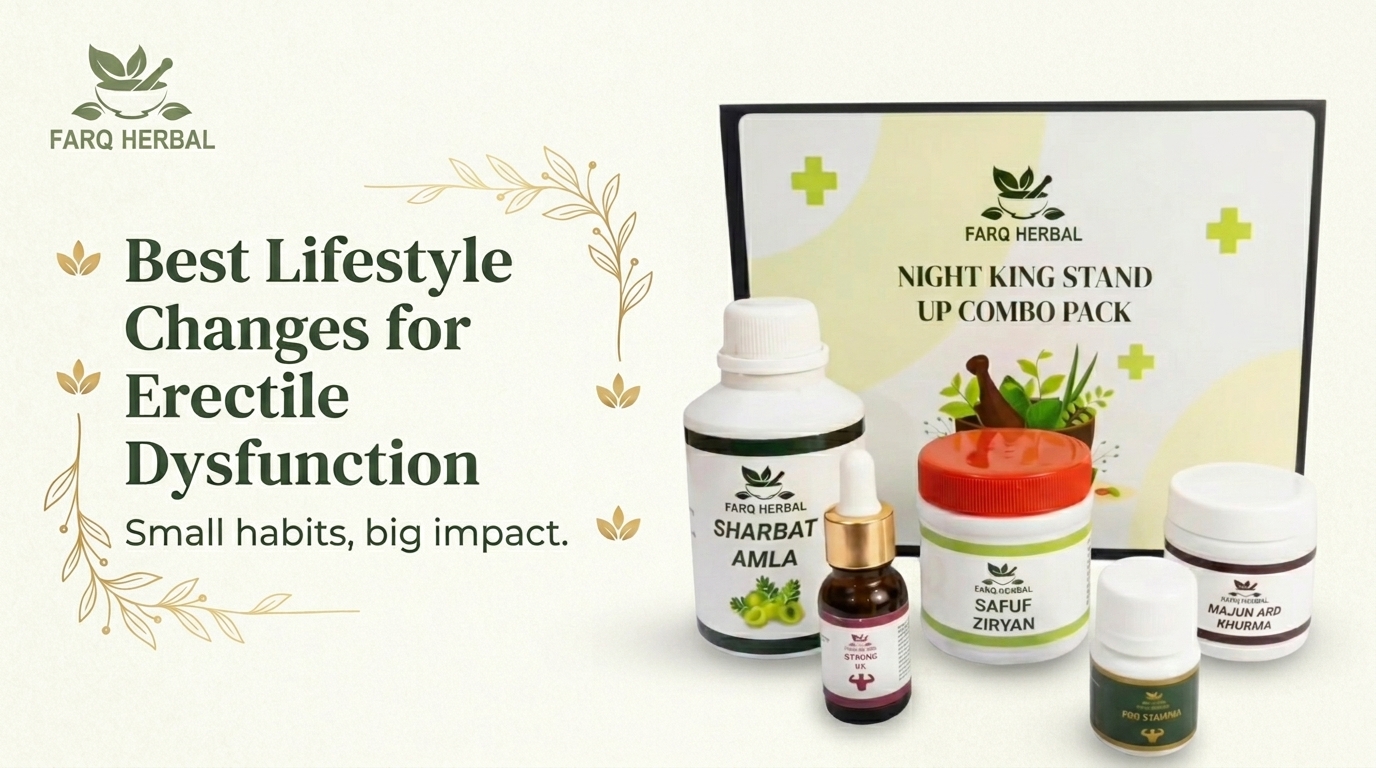
Natural herbs may offer additional wellness support. The FARQ Herbal Night King Stand Up Combo Pack is designed to support men’s stamina, energy, confidence, and overall wellness as part of a healthy lifestyle routine. Incorporating such herbal products can be a beneficial addition to natural lifestyle changes.
Influence of Lifestyle Factors
Lifestyle factors such as smoking, alcohol use, and diet deeply impact erectile health. Smoking cessation improves circulation, while limiting alcohol intake can prevent blood pressure fluctuations that may impact erections. Prioritize a diet low in processed foods and rich in nutrients for additional support.
When Should You Consult a Professional?
While lifestyle changes can offer significant support, consulting a healthcare professional is important when issues persist despite changes. Persistent symptoms could indicate underlying conditions like diabetes or cardiovascular problems that require medical attention.
Final Thoughts
Implementing strategic lifestyle changes can significantly support men’s health regarding erectile dysfunction. Incorporating the FARQ Herbal Night King Stand Up Combo Pack can further enhance your wellness routine. Make changes today for a healthier tomorrow.
FAQs
How can exercise help with erectile dysfunction?
Exercise enhances cardiovascular health, improving blood flow, which is vital for erectile function. Regular activity also helps regulate hormones and reduce stress.
What dietary changes are recommended for ED?
A diet rich in fruits, vegetables, whole grains, and lean proteins can support vascular health, improving blood flow which is essential for erectile function.
Can stress affect erectile dysfunction?
Yes, stress can lead to higher cortisol levels, impacting hormonal balance and reducing erectile function. Management techniques such as mindfulness can be beneficial.
Is there a natural remedy that supports ED?
Herbs like ginseng and products such as the FARQ Herbal Night King Stand Up Combo Pack may support wellness related to erectile function.
When should I see a doctor for erectile dysfunction?
If lifestyle changes do not alleviate symptoms, consult a healthcare professional to rule out underlying conditions like diabetes or heart disease.
This content is for educational purposes only and is not a substitute for professional medical advice. If you have ongoing symptoms or health concerns, consult a qualified healthcare professional.