
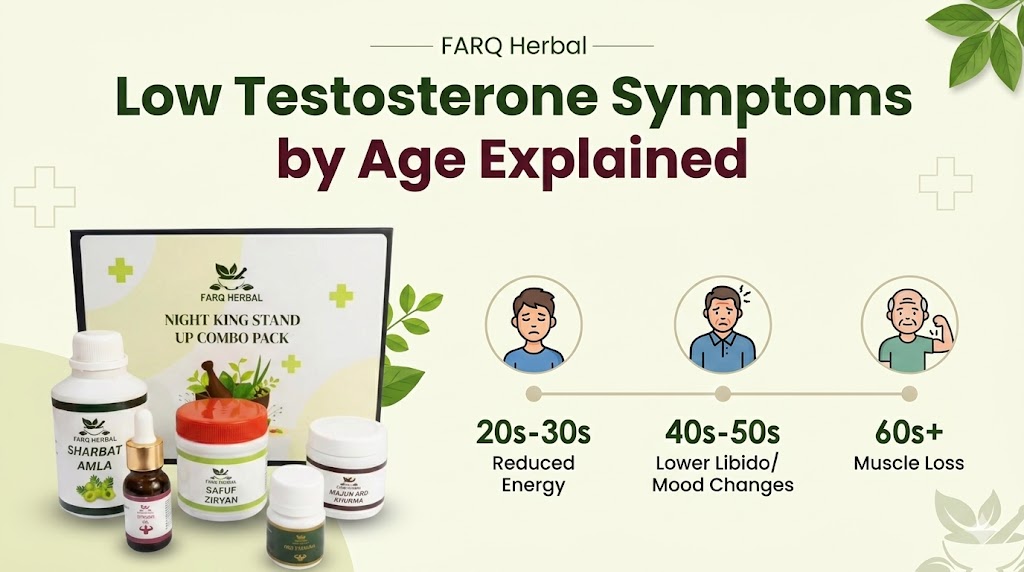
Vitality naturally evolves as men move through life. The energy and drive of your twenties can feel different in your forties or sixties — and that’s a normal part of aging. Understanding how low testosterone symptoms by age tend to show up can help you set realistic expectations and support your wellness at every stage. This article is educational only and isn’t a diagnosis. If symptoms concern you, a qualified healthcare professional is the best resource.
How Testosterone Changes With Age
Testosterone levels generally peak in early adulthood and then gradually decline over the years. This is a slow, natural process for most men. Because the change is gradual, many men don’t notice it day to day — but lifestyle factors like sleep, stress, and activity can influence how smoothly the transition feels.
In Your 20s and Early 30s
This stage is often associated with peak energy and recovery. When men this age feel low, it’s frequently tied to lifestyle: irregular sleep, high stress, poor nutrition, or overtraining. Common experiences may include:
- Fatigue from inconsistent routines
- Mood swings linked to stress or sleep debt
- Dips in motivation during busy periods
The good news is that habit changes often make a meaningful difference at this stage.
In Your 30s and 40s
Many men begin to notice subtle shifts here. Alongside natural changes, busy careers and family life can add stress and reduce sleep. Signs men sometimes mention include:
- Lower energy in the afternoons
- Slower recovery after workouts
- Changes in body composition
- Reduced drive or focus
This is a great decade to double down on consistent sleep, balanced nutrition, and regular movement.
In Your 50s
As men reach their fifties, the gradual decline may become more noticeable. Experiences that some men report include:
- More persistent fatigue
- Changes in muscle tone and strength
- Shifts in mood or motivation
- Changes in sleep quality
Staying active and prioritizing recovery becomes especially valuable here.
In Your 60s and Beyond
Vitality continues to change, and overall health takes center stage. Maintaining strength, mobility, and good sleep supports quality of life. Regular check-ins with a healthcare professional are particularly helpful at this stage to keep an eye on overall well-being.
Lifestyle Habits That Help at Every Age
No matter your decade, the fundamentals stay remarkably consistent:
- Sleep 7–9 hours on a regular schedule
- Eat a balanced, whole-food diet
- Include strength and movement most weeks
- Manage stress with downtime and connection
- Stay hydrated and limit excess alcohol
These habits support energy, mood, and vitality across the lifespan.
Where Herbal Lifestyle Support Fits In
Some men like to add herbal wellness products to their routine as they focus on aging well. If you’re looking for herbal lifestyle support for men’s stamina, energy, confidence, and overall wellness, you can explore the FARQ Herbal Night King Stand Up Combo Pack. As always, it works best alongside healthy habits rather than in place of them.
The Takeaway
Changes in vitality are a natural part of getting older, and they look a little different in each decade. By understanding what’s common for your age and leaning into steady, healthy habits, you can support your well-being at every stage. For symptoms that persist or worry you, reach out to a qualified healthcare professional.
FAQ Section
- At what age do testosterone levels start to change? Levels generally peak in early adulthood and decline gradually over the years. The pace varies from person to person.
- Are age-related changes something to worry about? Gradual change is a normal part of aging. Persistent or troubling symptoms are worth discussing with a healthcare professional.
- Can younger men have low energy too? Yes. In younger men, low energy is often connected to lifestyle factors like sleep, stress, and nutrition.
- Do the same habits help at every age? Largely, yes. Sleep, nutrition, exercise, and stress management support vitality across all decades.
- Can herbal products support aging well? They can be part of a daily routine. The FARQ Herbal Night King Stand Up Combo Pack offers herbal lifestyle support alongside healthy habits.